Read-aloud
Reading the same book 100 times is doing something.
By M.F. Chang · July 2026 · 4 min read
"Again!" If you've read the same board book so many times you could recite it with your eyes closed, you might quietly wonder whether all this repetition is a rut. It isn't. When a toddler asks for the same story for the fiftieth time, they're not being stubborn. They're doing exactly what their growing brain is built to do.
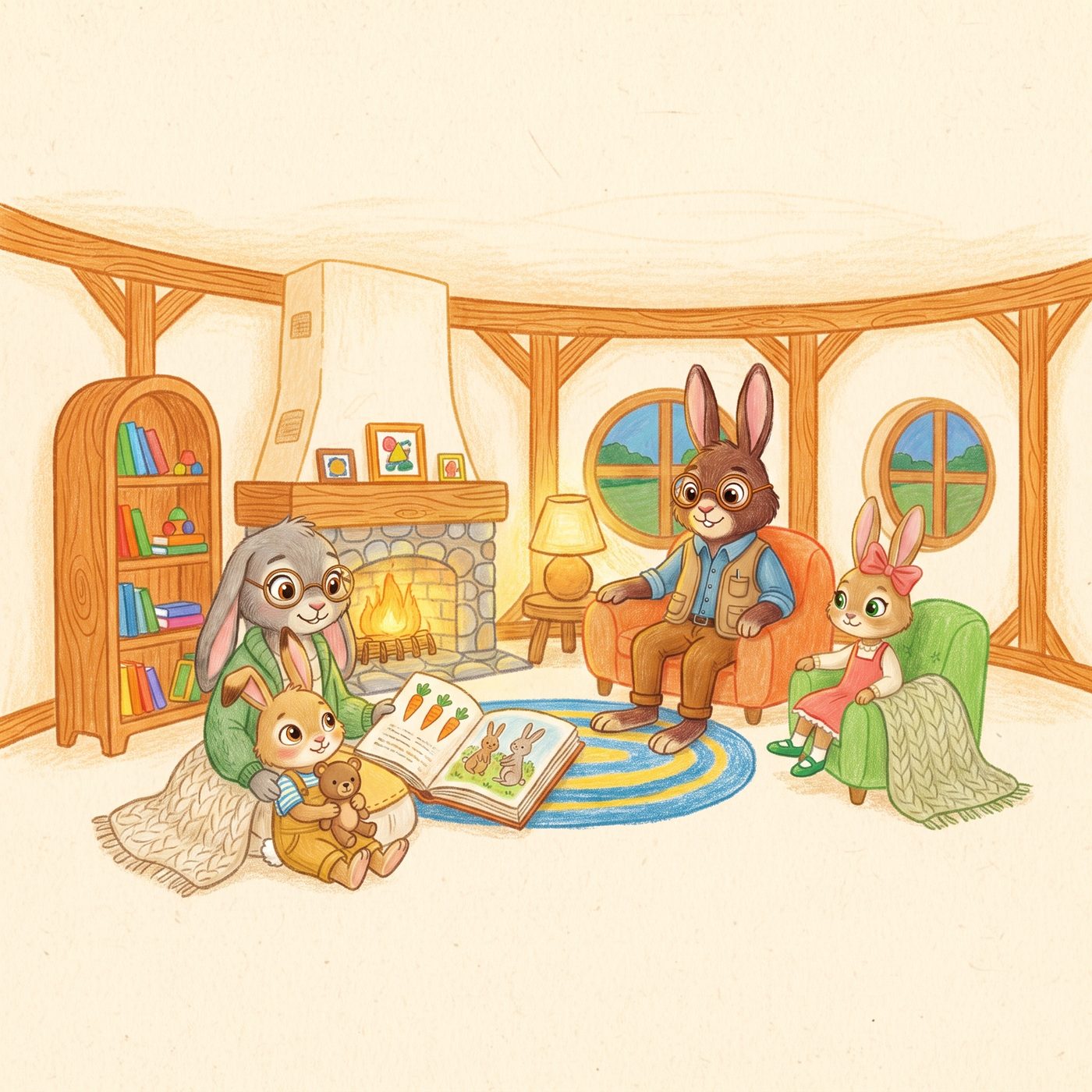
Why toddlers demand repetition
For a small child, the world is mostly new and mostly unpredictable. A familiar story is one of the few things they can master completely. Each reread, they know a little more of what's coming, and that feeling of "I know this" is deeply reassuring. Repetition is also how young brains learn: hearing the same words, in the same order, in the same pictures is what turns a one-time experience into something they truly own.
Rehearsal through story
Here's the part that's easy to miss. A story about a scary-then-okay first (a first day, a first haircut, a first doctor visit) lets a child live through it safely, again and again, before it happens in real life. They watch the character feel nervous, do the hard thing, and come out fine. By the time the real first arrives, it isn't entirely new: they've rehearsed the shape of it a hundred times from the safety of your lap. That's why repetition on the right book is so powerful: the child isn't just being entertained, they're practicing.
Reading with a wobbly kid
If your child gets fidgety, upset, or overwhelmed at parts of a story, that's information, not a problem. A few things that help:
- Let them turn the pages. Giving them control over the pace turns a passive listen into something they're steering, and a child in control is a calmer child.
- Pause on the feelings. When the character is scared, stop. "Look, he's nervous. Have you ever felt like that?" A pause invites them in instead of rushing past the hard part.
- Connect it to their day. "Remember when you felt shy at the party?" Linking the story to their own life is what carries the lesson off the page.
- Let them look away or skip ahead. If a page is too much today, that's okay. They'll come back to it when they're ready, often on the very next read.
One skill per book, on purpose
Every Beem Bunnies book is built around a single gentle skill: one hard first, handled with care. First Day of School is about that first drop-off, and nothing else. That focus is by design: it's what makes a book worth rereading a hundred times. A child can hold one idea, name it, and practice it, instead of getting a little of everything and mastering none of it. So the next time you hear "Again!" from a well-worn favorite, you can say yes with confidence. All that repetition is quietly building something real.