Drop-off
The 3-step goodbye ritual that shortens drop-off tears.
By M.F. Chang · July 2026 · 4 min read
Drop-off tears are not a sign you're doing something wrong. For a small child, being handed off is genuinely one of the biggest things that happens all day. The good news: you can make the moment shorter and calmer, not by talking a child out of their feelings, but by making the goodbye predictable.
Why predictability calms a small brain
A young child can't yet reason their way through "I'll be fine, Mama always comes back." What they can do is learn a pattern. When the same thing happens the same way every single morning, the brain stops bracing for surprise and starts to relax. Predictability is the thing doing the soothing, not a clever speech. That's why a short, identical ritual usually beats a long, warm one that changes each day.
The three steps
Keep it small enough to do the same way every time, even on a rushed morning.
- 1. The same words. Pick one short line and use only that line. "I love you, I'll be back, have fun." Saying it identically every day turns it into a signal, not a negotiation.
- 2. The same gesture. A specific physical goodbye a child can count on: two hugs and a nose boop, or a secret handshake. The body remembers what the ears are too upset to hear.
- 3. A clear "when I'll be back" marker. Clocks mean nothing to a three-year-old, so anchor your return to something in their day: "I'll be back after songs and snack." It gives the wait a shape.
Why you should never sneak out
Slipping away while your child is distracted feels kinder in the moment, but it teaches the opposite of what you want: that a parent can vanish without warning. That makes the next drop-off harder, because now they have to keep one eye on you at all times. Always say your goodbye out loud, do the ritual, and go. A clean, honest exit builds trust that you'll always tell them when you're leaving.
If they cry anyway
Sometimes they'll cry no matter how good your ritual is, and that's okay. Tears aren't a failure of the plan.
- Name it simply: "You're sad Mama's leaving. That's okay. It's hard."
- Stay warm but brief. Lingering to fix the feeling usually stretches it out.
- Do the ritual, say your line, and go. A confident goodbye tells them you believe they'll be okay, which helps them believe it too.
- Check in later with the teacher. Most children settle within minutes of the door closing.
Rehearse it before the real day
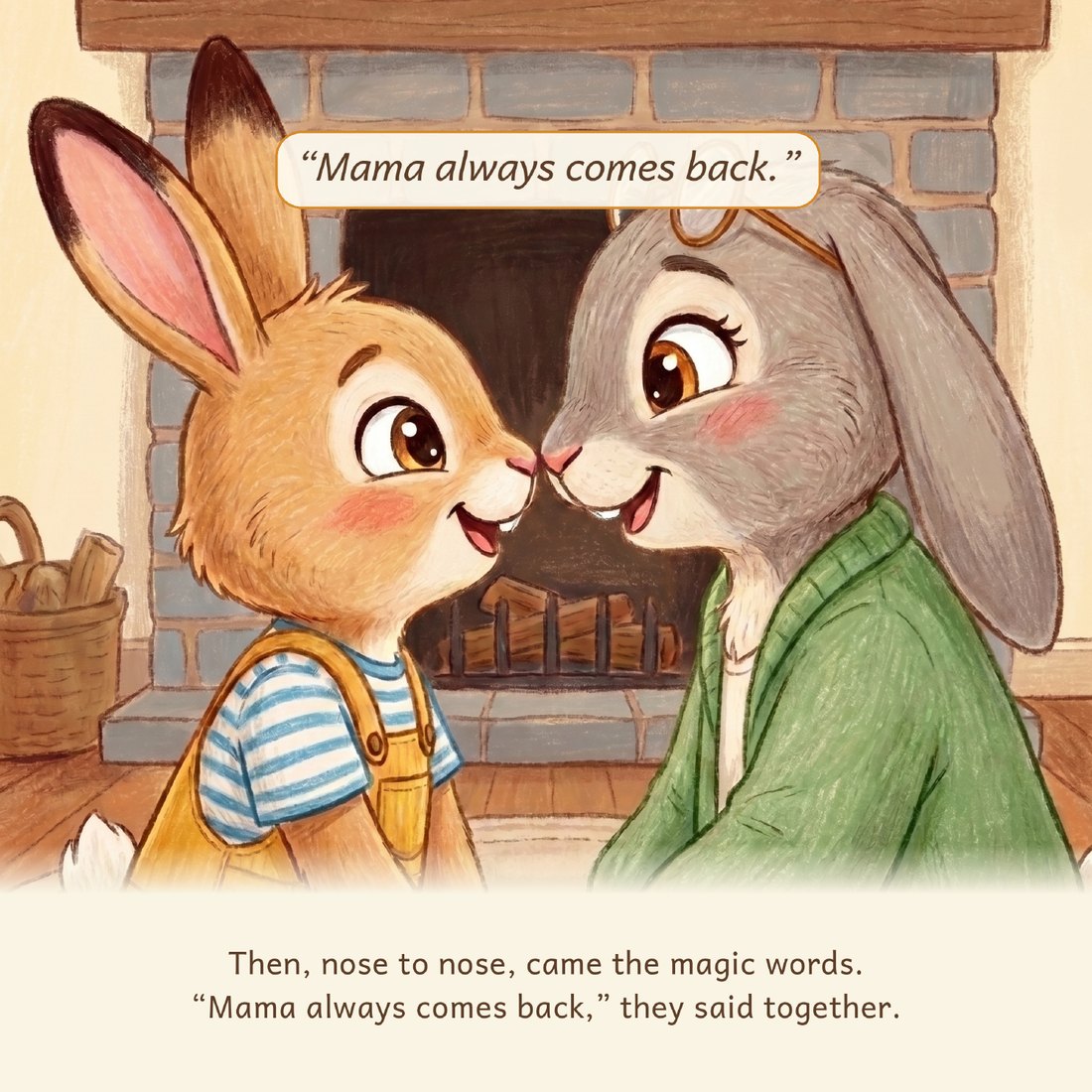
In First Day of School, Pip and Mama Mimi practice their goodbye at home before it ever has to happen at the gate: the same words, the same little gesture, the same "back after songs." By the time the real morning arrives, the ritual already feels familiar, and familiar is exactly what a nervous small heart needs. You can do the same: run the ritual at bedtime or over breakfast for a few days first, so the real goodbye is a rerun, not a surprise.
Short, predictable, honest. That's the whole ritual. It won't erase every tear, but it will make the moment smaller, and give your child a pattern they can lean on all the way to pickup.