Drop-off
How long do drop-off tears last? Week three is the turning point.
By M.F. Chang · September 2026 · 5 min read
It is day eight. Your child cried at the door again this morning, and the teacher's cheerful "she was fine two minutes after you left" is starting to sound like something teachers just say. So here is the question every parent asks in the second week and almost nobody answers with numbers: how long does this last?
There is a real answer. A Norwegian research team followed 113 toddlers through their first month of childcare, measuring the stress hormone cortisol in their saliva and asking both parents and caregivers how each child was doing, then checked back three months later. The pattern they found is the most useful thing you can know this month.
The four-week curve
Settling in is a curve, not a cliff, and it has a shape. The start is easy, because a parent stays in the room and cortisol barely moves. The first two weeks without the parent are the hard part. Week three is the turning point: cortisol dips and caregivers report clear progress. By about four weeks, the researchers wrote, most toddlers seem to have settled in, and at the three-month check stress levels were back to where they had been on day two.
So day eight tears are not a sign of failure. Day eight is the middle of the hardest stretch, and the hardest stretch has an end date you can roughly circle on the calendar.
The tears move home before they disappear
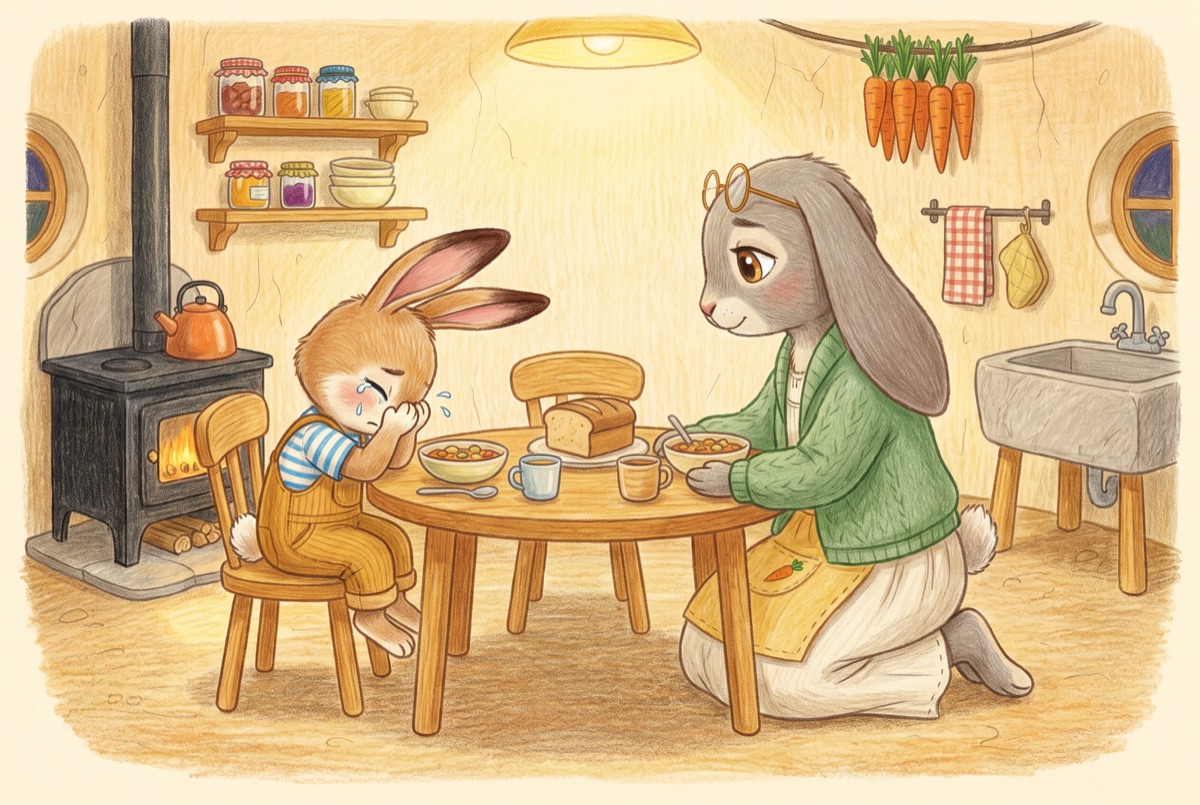
Here is the part the door does not show you. In the same study, parents reported that many children were exhausted and tired at home in the evenings throughout the first four weeks, even while caregivers were seeing daytime progress. The child who stopped crying at drop-off but melts down at six o'clock is not going backward. Holding it together all day costs something, and the bill arrives at dinner.
An older study makes the same point with numbers. Researchers measured cortisol in 70 fifteen-month-olds during their first nine days of childcare without a parent. In the first hour after the mother left, cortisol rose to 75 to 100 percent above home levels. While she was still in the room it hardly rose at all. The stress is real, it is measurable, and it is also temporary.
Your calm is half the medicine
When Dutch researchers surveyed 694 parents as childcare centers reopened after a two-month closure, about 29 percent of children showed real distress in the first two weeks. Two things predicted which children struggled most. One was age, with younger children finding it harder. The other, just as strong, was the parent's own separation anxiety. Children with fewer hours in care per week also had a harder time, which is a quiet argument against the every-other-day easing-in that feels gentler but keeps the routine from ever becoming routine.
You cannot change your child's age. You can work on the other two.
What shortens the curve
- Stay, then taper. The Norwegian program that produced the four-week curve had a parent in the room for at least the first five days, with early pick-ups in the weeks after. Cortisol stayed low the whole time a parent was present. If your center allows a stay-and-taper start, take it.
- Visit before day one. Those toddlers also had four to eight one-hour visits before they started. A room a child has already played in is not a strange room.
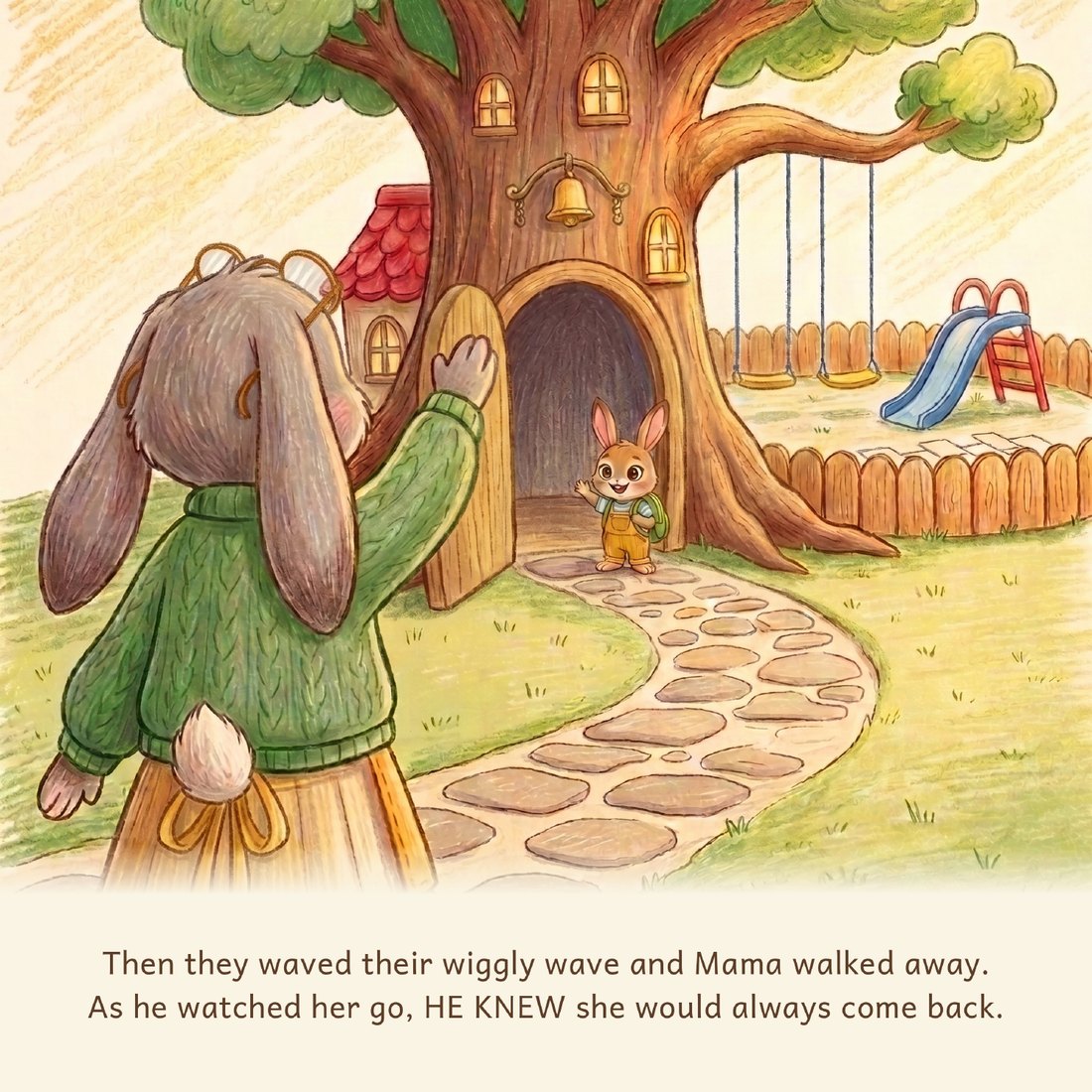
- Keep the goodbye short and identical. The American Academy of Pediatrics puts it plainly: if you linger, the transition time does too. Same words, same gesture, every day.
- Give the return a marker they can picture. "After nap and before snack" means something to a three-year-old. "Three o'clock" does not.
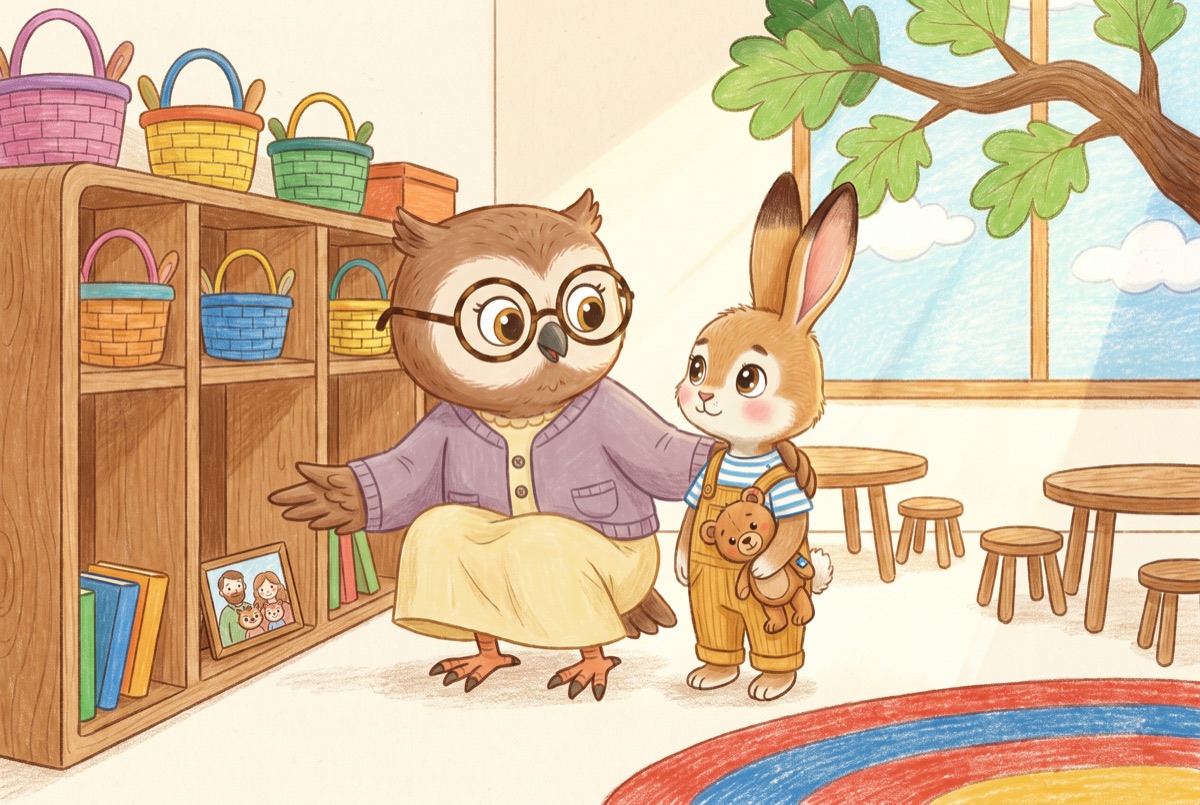
- Send a piece of home. A special blanket or toy at the goodbye, a family photo for the cubby, or a shirt that smells like you, left with the teacher.
- Let one teacher become the person. The study centers assigned a key worker to each small group. Toddlers need time before they can use a new adult as a safe base, and one steady face gets them there faster than a rotating cast.
What stretches it out
Sneaking away while your child is distracted feels kind and teaches the opposite of what you want. As Zero to Three puts it, sneaking away makes a child worry that you might leave at any time. Coming back into the room because of a plea does the same damage from the other direction: it teaches that enough tears bring you back. And thin or patchy attendance keeps resetting the clock, which is why the Dutch study found more distress in children with fewer hours per week.
When to ask for help
Daily tears at the door for two or three weeks, easing by week three or four, with a tired child in the evenings, is the normal range. Individual variation is large, and a slow settler is not a broken one. The clinical bar is higher and clearer: separation anxiety disorder requires fear that is out of step with the child's age, lasting at least four weeks, and getting in the way of daily life. If the distress has not eased at all by the end of week four, or your child cannot settle within a few minutes after you leave, talk to the teacher and your pediatrician.
Rehearse the curve before you live it
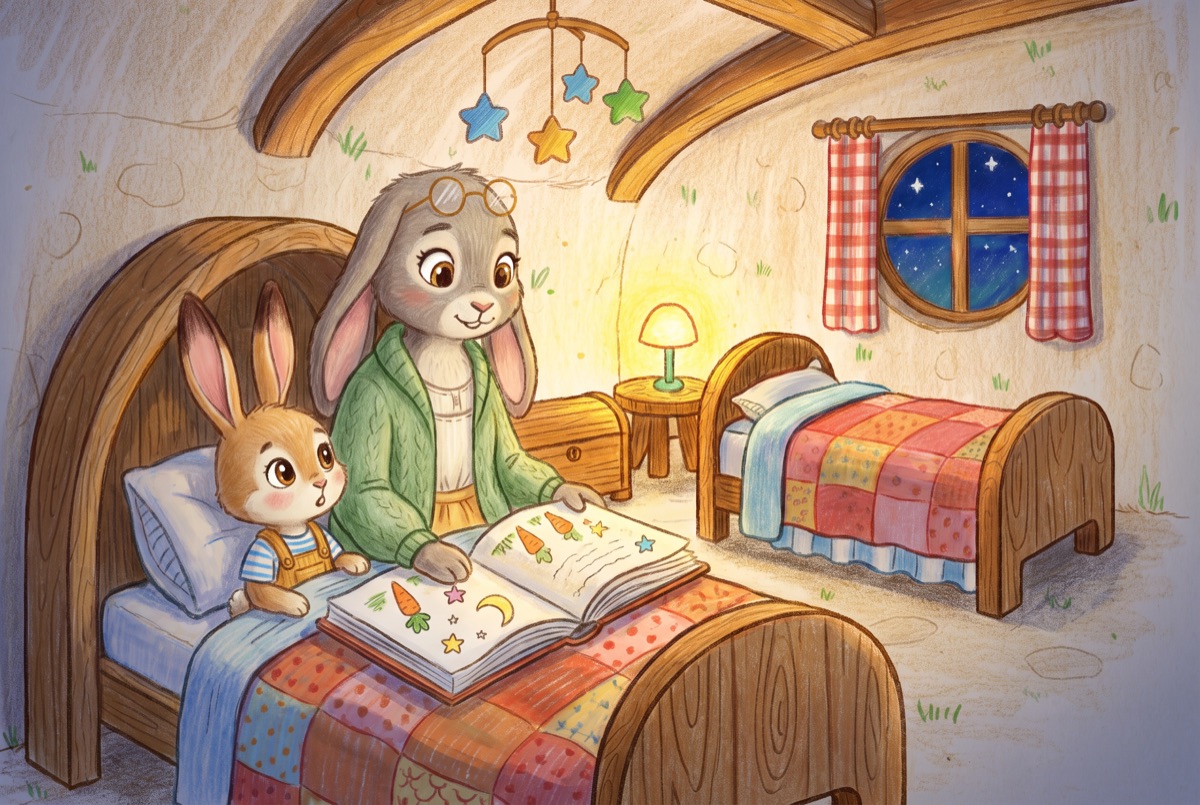
Children handle a hard first far better when they have already lived it in a story. That is exactly what Pip's First Day of School is for. Pip is nervous, his tummy feels like popcorn, and Mama Mimi gives him a short goodbye ritual and one true sentence: Mama always comes back. He practices it at home, uses it at the gate, and finds out it holds. Read it in the week before school starts, then again on the hard mornings of week two. For the research behind every page, see our separation anxiety guide for parents.
The tears are real. So is the curve. Circle week three, keep the goodbye small, keep yourself steady, and let the routine do its slow work.
Read it with Pip. Pip's First Day of School turns this into a story a three-year-old can rehearse at bedtime. Get it on Amazon. As an Amazon Associate, Beem Bunnies earns from qualifying purchases.
Related posts
Sources
- Nystad, Drugli, Lydersen, Lekhal and Buoen. Do toddlers' levels of cortisol and the perceptions of parents and professional caregivers tell the same story about transition from home to childcare? Frontiers in Psychology, 2023
- Ahnert, Gunnar, Lamb and Barthel. Transition to child care: associations with infant-mother attachment, infant negative emotion, and cortisol elevations. Child Development, 2004
- Vermeer et al. Child care in times of COVID-19: predictors of distress in Dutch children and parents when re-entering center-based child care after a 2-month lockdown. Frontiers in Psychology, 2021
- Datler, Ereky-Stevens, Hover-Reisner and Malmberg. Toddlers' transition to out-of-home day care: settling into a new care environment. Infant Behavior and Development, 2012
- American Academy of Pediatrics (HealthyChildren.org): How to Ease Your Child's Separation Anxiety, updated May 2026
- Zero to Three: Separation Anxiety
- MSD Manual Professional Edition: Separation Anxiety Disorder, DSM-5-TR criteria